iPhone 30W vs 20W: What Is the Difference? Does 30W Charge Faster?
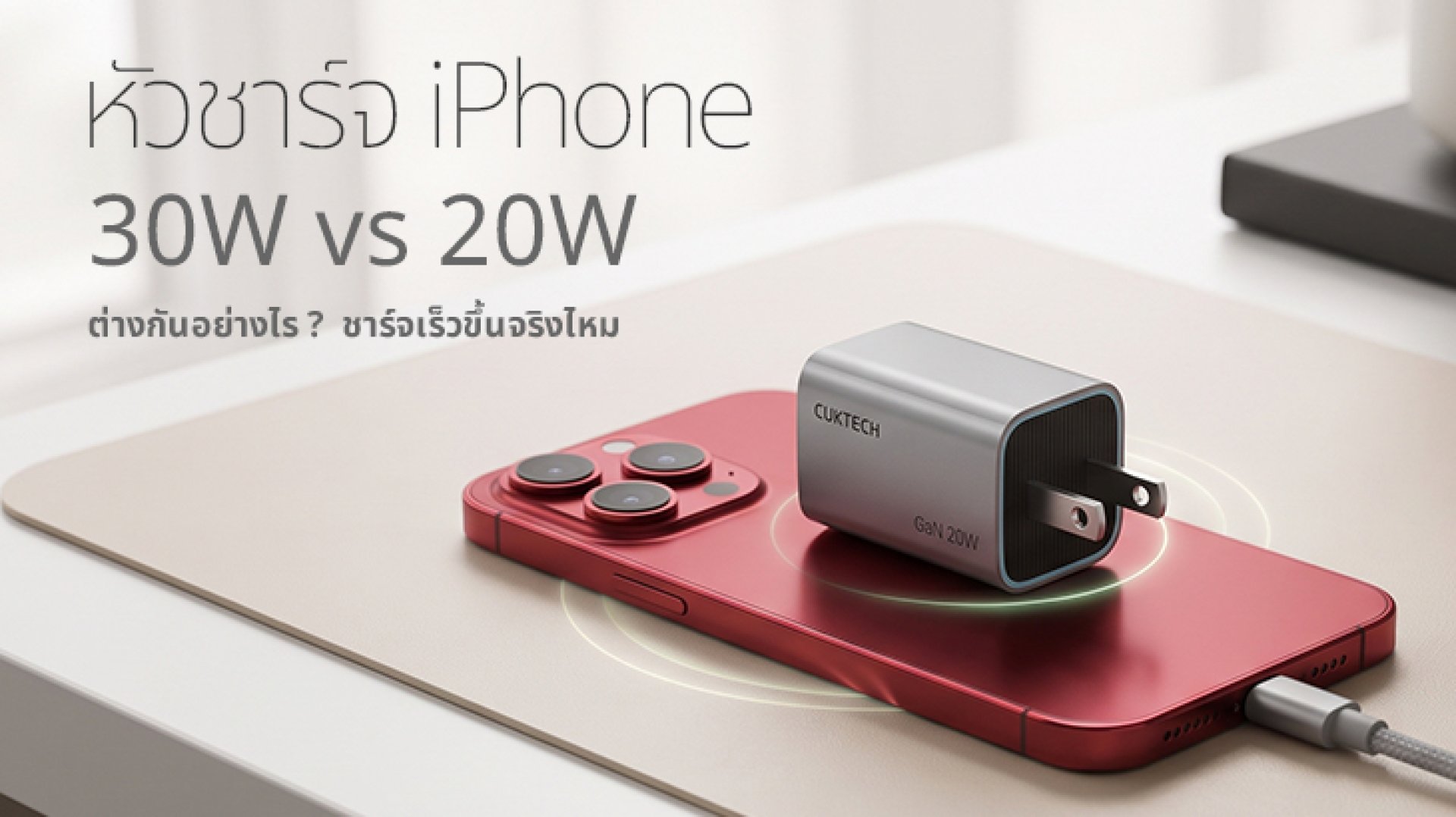
When choosing an iPhone charger, you may wonder: Is a 30W charger really faster than a 20W charger? And if your iPhone supports fast charging, is it worth upgrading to a higher-wattage adapter?
The answer is not simply 30W is 50% faster than 20W. The actual charging speed depends on the iPhone model, USB Power Delivery (USB-PD), cable, battery level, temperature, and how much power the iPhone can accept at that moment.
iPhone 30W vs 20W: What Is the Difference?
The main difference is the maximum power output of the charger.
| Feature | 20W Charger | 30W Charger |
|---|---|---|
| Maximum output | Up to 20W | Up to 30W |
| USB-C PD | Can support USB-PD | Can support USB-PD |
| iPhone fast charging | Supported on compatible models | Supported on compatible models |
| Maximum power available | Lower | Higher |
| Other USB-C devices | Suitable for phones and smaller devices | More headroom for compatible devices |
However, a 30W charger does not automatically make an iPhone charge at 30W. The iPhone and charger negotiate the appropriate power level through the charging protocol.
Does a 30W Charger Charge an iPhone Faster Than 20W?
It can, but not always.
If the iPhone is designed to use more than 20W under certain charging conditions, a 30W adapter can provide more available power than a 20W adapter.
However, charging power is not constant throughout the entire charging process. The iPhone manages charging dynamically, and the power level can change depending on the battery percentage, temperature, system conditions, and other factors.
Therefore, it would be incorrect to calculate the charging speed simply as:
30W ÷ 20W = 1.5
That does not mean a 30W charger will charge an iPhone 50% faster.
Why Doesn't an iPhone Always Use the Full 30W?
The wattage printed on a charger represents its maximum output capability, not the amount of power that the iPhone must continuously consume.
For example, a 30W USB-C PD charger can provide up to 30W when the connected device requests a compatible power level. If the iPhone only requests less power, the charger does not force 30W into the device.
This is why using a higher-wattage USB-C PD charger does not mean the iPhone will constantly receive that maximum wattage.
What Does Apple Say About iPhone Fast Charging?
Apple states that compatible iPhones can fast charge when used with an appropriate USB-C power adapter and charging cable.
For example, Apple currently states that the iPhone 17e and iPhone Air can reach up to 50% charge in around 30 minutes with a 20W or higher adapter.
For the iPhone 17, iPhone 17 Pro, and iPhone 17 Pro Max, Apple states that they can reach up to 50% in around 20 minutes when using a 40W or higher USB-C adapter.
This is an important distinction: 30W is not the same as Apple's current 40W threshold for the fastest wired charging result on those iPhone 17 models.
What About MagSafe Charging?
The difference between 20W and 30W becomes particularly interesting when using wireless charging.
Apple states that for iPhone 16 and later, fast MagSafe charging requires a 30W or higher USB-C power adapter.
For iPhone 15 and earlier, Apple lists a 20W or higher USB-C adapter for MagSafe charging, with charging up to 15W depending on the iPhone and MagSafe setup.
So if you use MagSafe, a 30W adapter can have a more obvious practical advantage than simply comparing 20W and 30W for wired charging.
20W vs 30W: Which One Should You Choose?
Choose 20W if...
- You mainly charge an iPhone.
- You want a compact and simple charger.
- You already have a 20W USB-C PD adapter.
- You do not need additional power for other USB-C devices.
- Your iPhone model does not benefit significantly from a higher-power adapter.
Choose 30W if...
- You want additional power headroom.
- You use MagSafe with a compatible newer iPhone.
- You also charge other USB-C devices.
- You want one charger that can handle a wider range of devices.
- The price difference between a good 20W and 30W charger is small.
Does Using a 30W Charger Damage an iPhone?
No, not simply because the charger is rated at 30W.
A compatible USB-C power adapter does not continuously force its maximum rated power into the iPhone. The device and charger communicate to determine an appropriate charging power.
Apple also states that iPhones can be charged using a 20W USB-C adapter or higher-wattage USB-C adapters, including adapters supplied with Mac laptops.
What matters more is choosing a quality charger that follows the appropriate USB-C and USB-PD standards, together with a suitable charging cable.
Does the Charging Cable Matter?
Yes. The charger is only one part of the charging system.
For newer iPhones with USB-C, Apple recommends using a USB-C cable together with a compatible USB-C power adapter. USB Power Delivery is also supported.
A suitable cable helps ensure that the charger and iPhone can operate within their supported charging specifications.
20W vs 30W: Is the Upgrade Worth It?
If you already own a good 20W USB-C PD charger and mainly charge your iPhone with a cable, there may not be a dramatic difference in everyday use.
However, a 30W charger can be more versatile, particularly if you use MagSafe with a compatible newer iPhone or want one charger that can also provide more power to other USB-C devices.
The important point is that higher wattage does not automatically mean proportionally faster charging. The iPhone's charging system determines how much power it actually uses.
Quick Summary: iPhone 30W vs 20W
| Question | Answer |
|---|---|
| Is 30W more powerful than 20W? | Yes. It has a higher maximum output. |
| Will 30W make every iPhone charge 50% faster? | No. Charging speed is not directly proportional to charger wattage. |
| Can an iPhone use a 30W charger? | Yes, when the charger is compatible with the iPhone. |
| Does 30W automatically force 30W into the iPhone? | No. The device determines the power it can use. |
| Is 20W enough for fast charging? | It is sufficient for fast charging on many compatible iPhone models. |
| Is 30W useful for MagSafe? | Yes, especially for compatible newer iPhone models where Apple specifies a 30W or higher adapter. |
Conclusion
iPhone 30W vs 20W is not simply a question of which charger has the bigger number.
A 20W charger can already provide fast charging for many iPhone models, while a 30W charger provides more available power and can be more versatile for MagSafe and other USB-C devices.
If you already have a reliable 20W USB-C PD charger, there is not necessarily a reason to replace it just because a 30W model exists. But if you are buying a new charger and want more flexibility, 30W can be a practical step up.
References
- Apple Support Fast charge your iPhone
- Apple Support Charge and connect with the USB-C connector on iPhone
- Apple Support How to use your MagSafe Charger with iPhone
- Apple USB-C Power Adapters and Chargers