Does Leaving a Phone Charger Plugged In Without Charging Your Phone Use Electricity
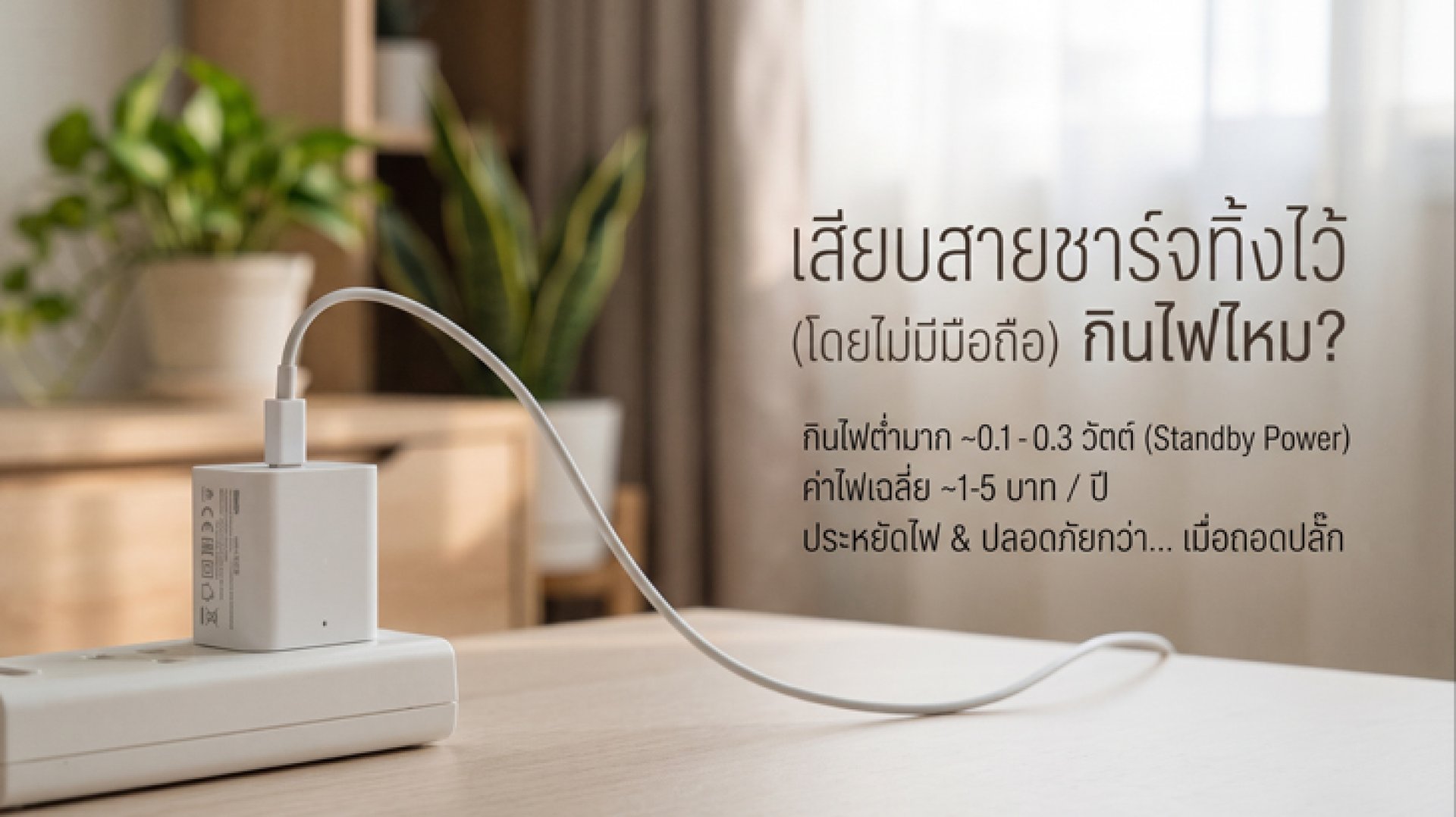
Many people leave their phone chargers plugged into wall outlets even after disconnecting the charging cable from their phones. This raises a common question: does leaving a phone charger plugged in without charging a phone still consume electricity? And if it does, how much will it add to your electricity bill? This is especially worth considering in homes where several chargers are permanently plugged in around bedrooms, work desks, or bedside outlets.
The answer is yes. Leaving a phone charger plugged in still consumes a small amount of electricity, even when no phone is connected. This happens because the charger's internal circuits remain connected to the household power supply and may continue consuming energy in a state known as No-load or Standby. However, this consumption is generally very low compared with the power used when actively charging a device. In this article, we will calculate how much electricity it uses, estimate the monthly and yearly costs, and explain whether you should unplug your charger when it is not in use.
Does Leaving a Phone Charger Plugged In Without a Phone Still Use Electricity?
Yes. Leaving a phone charger plugged in still uses electricity, even when no phone or other device is connected to the charging cable. When a charger is plugged into a wall outlet, electricity from the household power supply enters its internal circuits. These circuits are designed to convert alternating current (AC) into direct current (DC), which can then be supplied to a connected device.
When no phone is connected, the charger does not deliver power to a device as it normally would during charging. However, some of its internal components may still require a small amount of energy. These may include power-control circuits, connection-detection circuits, and energy losses within the device. Therefore, leaving a phone charger plugged in does not necessarily mean its electricity consumption is zero watts.
This type of electricity usage is called No-load Power Consumption, which refers to the energy consumed when no load is connected. The term Standby Power describes the energy an electrical device uses while waiting to operate or remaining in a low-power state, even when the user is not actively using it.
Why Does a Charger Use Electricity When No Phone Is Connected?
Modern chargers are more than simple connections between a power outlet and a phone. They contain multiple electronic circuits that work together. This is particularly true of USB-C PD chargers, which need to detect connected devices and adjust their power output to suit a phone, tablet, or other compatible equipment.
Even when no device is connected, some internal circuits remain in a ready-to-operate state and may consume a small amount of energy. This is why leaving a phone charger plugged in can still generate a small electricity cost. However, it does not mean the charger is continuously using its full rated wattage.
How Many Watts Does a Phone Charger Use When Left Plugged In?
The amount of electricity consumed by a charger without a connected phone varies depending on its circuit design, component quality, supported power output, and manufacturing standards. A 20W charger does not consume 20W continuously while plugged in, and a 100W charger does not consume 100W when no device is connected.
The wattage printed on a charger, such as 20W, 30W, 65W, or 100W, represents its maximum power delivery capability under suitable conditions. It does not represent the amount of electricity consumed continuously when the charger is plugged in without charging a device.
Examples of No-load Power Consumption
To make the calculation easier to understand, let's use 0.1W as an example of the power consumed by a charger while it is plugged in but not connected to a phone. This is an illustrative figure for calculation purposes, not a guaranteed consumption level for every charger brand or model.
| Operating Condition | Example Power Consumption | Energy Usage |
|---|---|---|
| Plugged in, no phone connected | 0.1W | Very low continuous consumption |
| Plugged in, no phone connected | 0.2W | Twice the consumption of the first example |
| Plugged in, no phone connected | 0.5W | Five times the consumption of the first example |
As you can see, leaving a phone charger plugged in does not result in the same electricity consumption for every charger. Even chargers with the same maximum wattage may have different no-load power consumption. If you want to know the actual consumption of a charger at home, use a power meter that can measure very low wattage levels. A standard household electricity meter may not clearly display the small amount of electricity used by a single charger.
How Much Does Leaving a Phone Charger Plugged In Cost Per Month?
Now that we know leaving a phone charger plugged in still consumes electricity, we can estimate the cost using a simple formula.
Electricity consumption (kWh) = Power (W) × Operating Hours ÷ 1,000
Multiply the electricity consumption in kilowatt-hours (kWh) by the electricity rate per unit to estimate the cost of running the charger.
Example: Calculating the Cost of a Charger Using 0.1W
Assume that a charger is left plugged in for 24 hours a day and consumes an average of 0.1W in its no-load state. For this example, we will use an electricity rate of 4.50 baht per kWh. This is a simplified example and does not separately calculate the actual bill's Ft charge, tax, or service fees.
| Period | Electricity Used | Estimated Cost |
|---|---|---|
| 1 day | 0.0024 kWh | 0.0108 baht |
| 1 month (30 days) | 0.072 kWh | 0.324 baht |
| 1 year (365 days) | 0.876 kWh | 3.942 baht |
Based on this example, leaving a phone charger plugged in with a no-load consumption of 0.1W for an entire year would cost approximately 3.94 baht. This is a very small amount and would have almost no noticeable impact on a household electricity bill if you only have one charger with low standby consumption.
What If You Leave Several Chargers Plugged In?
Although one charger consumes very little electricity, the total usage increases when several chargers are left plugged in at the same time. Let's look at an example where every charger consumes 0.1W in its no-load state.
| Number of Chargers | Monthly Electricity Cost | Yearly Electricity Cost |
|---|---|---|
| 1 charger | Approximately 0.32 baht | Approximately 3.94 baht |
| 3 chargers | Approximately 0.97 baht | Approximately 11.83 baht |
| 5 chargers | Approximately 1.62 baht | Approximately 19.71 baht |
| 10 chargers | Approximately 3.24 baht | Approximately 39.42 baht |
These figures assume that every charger consumes exactly 0.1W and remains plugged in continuously. They are illustrative calculations, not guaranteed costs for every household. They show that leaving a phone charger plugged in across multiple outlets does increase cumulative electricity consumption. However, if the chargers are well-designed and energy-efficient, the resulting electricity cost is still relatively low.
Do 20W, 30W, 65W, and 100W Chargers Consume Different Amounts of Electricity When Left Plugged In?
You may wonder whether a high-wattage charger, such as a 65W or 100W model, consumes more electricity than a 20W or 30W phone charger. The answer cannot be determined from maximum wattage alone.
The wattage printed on a charger describes its power delivery capability, not its no-load electricity consumption. Leaving a phone charger plugged in with a 100W charger does not mean it will consume five times as much electricity as a 20W charger.
A High-wattage Charger Does Not Continuously Consume Its Maximum Power
USB-C PD chargers deliver power according to the requirements and capabilities of the connected device. The charger and device negotiate the appropriate voltage and current levels. When no phone is connected, the charger does not deliver its maximum rated output.
What matters is the efficiency of the internal circuits and the amount of energy consumed while no load is connected. Therefore, if you want to compare a 20W charger with a 100W charger, check the no-load power consumption listed in the technical specifications or measure it with a suitable instrument. Do not judge electricity consumption solely by the maximum wattage printed on the charger.
Is It Dangerous to Leave a Phone Charger Plugged In Without Charging?
From an electricity-consumption perspective, leaving a phone charger plugged in does not automatically create a safety hazard if the charger is high-quality and in good condition. However, leaving an electrical device connected to a wall outlet continuously can involve certain risks, particularly when the charger is uncertified or damaged.
1. Heat Generated by Internal Circuits
A charger may consume a small amount of energy and generate a little heat even when no phone is connected. If the charger becomes unusually hot while not in use, unplug it and inspect the device. Excessive heat may indicate an internal fault or poor manufacturing quality.
2. Risks from Low-quality or Uncertified Chargers
Cheap chargers without clear manufacturer information or recognized safety certifications may contain low-quality internal components or inadequate protection systems. Therefore, leaving a phone charger plugged in for long periods should not be taken lightly when the device is of questionable quality. Stop using a charger if you notice signs such as a burning smell, unusual noises, or cracks in its casing.
3. Damage to Wall Outlets and Power Strips
Sometimes the problem does not come from the charger itself. It may be caused by a loose wall outlet, burn marks, or a worn-out power strip. If the charger does not fit securely, sparks appear, or the outlet becomes unusually hot, stop using it and have it inspected by a qualified electrician.
Should You Unplug Your Phone Charger Every Time?
If you are wondering whether you must unplug your charger every time you finish charging, the recommended practice is to unplug it when it is not in use. This is especially important when leaving home for an extended period, traveling for several days, or when there is no reason to keep the charger connected. Although the electricity cost of leaving a phone charger plugged in is generally low, unplugging it helps reduce unnecessary electricity consumption and limits the number of devices connected to your household power supply.
However, there is no need to panic if you accidentally leave a charger plugged in overnight. A certified charger in good condition generally has low no-load power consumption. The important things are to choose quality products and regularly check their condition.
When Should You Unplug Your Charger?
- Before leaving home for an extended period: Unplug chargers that are not in use to reduce the number of devices connected to the electrical system.
- Before traveling for several days: Check chargers and other devices that may have been left plugged into outlets around your home.
- When the charger becomes unusually hot: Stop using it and unplug it immediately.
- When you notice physical damage: Do not continue using a charger with a cracked casing, damaged cable, or deformed plug.
- When a power strip is not in use: Turn off its switch or unplug it when appropriate, especially if no connected devices need power.
How to Check Your Charger's No-load Power Consumption
If you want to know how much electricity leaving a phone charger plugged in actually consumes at home, you can use a power meter or watt meter. This device is connected between the wall outlet and the charger. Choose a meter that can measure low power levels with sufficient accuracy.
Follow these basic steps:
- Plug the power meter into the wall outlet you want to test.
- Connect the charger you want to measure to the power meter.
- Disconnect the charging cable from your phone and all other devices.
- Check the power reading on the meter's display, using watts (W) as the unit.
- If the reading fluctuates, record the average value over an appropriate period.
- Use the measured wattage to calculate monthly or yearly electricity consumption.
Measuring very low power consumption requires a suitable instrument. Some chargers may consume only a fraction of one watt. A meter that does not display enough decimal places may show 0.0W even though the charger is still consuming a small amount of electricity.
Conclusion: Does Leaving a Phone Charger Plugged In Waste Electricity?
In summary, leaving a phone charger plugged in without charging a phone does consume electricity. The charger's internal circuits continue using energy in a No-load or Standby state. However, the amount is generally very small, especially when the charger is well-designed and energy-efficient. A single charger with low no-load consumption may cost only a few baht per year to leave plugged in.
Actual consumption depends on the charger's model and quality. You should not assume that every charger consumes exactly 0.1W when no device is connected. For a more accurate figure, check the manufacturer's technical specifications or use a power meter capable of measuring low power levels.
Even though the electricity cost is small, unplugging your charger when it is not in use remains a good habit. This is particularly important when leaving home for an extended period or when you notice unusual heat or physical damage. Choose certified chargers, inspect wall outlets regularly, and never leave damaged electrical equipment connected to your household power supply. These simple steps can help reduce unnecessary energy consumption and improve electrical safety.
FAQ: Frequently Asked Questions About Leaving a Phone Charger Plugged In
Does leaving a phone charger plugged in overnight without charging a phone use electricity?
Yes, it consumes a small amount of electricity because the charger's internal circuits remain connected to the household power supply in a No-load state. However, consumption is generally very low. For example, if a charger consumes 0.1W in its no-load state, leaving it plugged in for 8 hours uses approximately 0.0008 kWh.
How much does leaving a phone charger plugged in for one month cost?
The cost depends on the charger's no-load power consumption. If we assume it uses 0.1W continuously for 30 days, it consumes approximately 0.072 kWh. At an illustrative electricity rate of 4.50 baht per kWh, this costs approximately 0.32 baht.
Does a 100W charger consume 100W when left plugged in?
No. The 100W rating represents the maximum power the charger can deliver to a connected device. It is not the amount of electricity consumed when no phone is connected. Without a device to charge, the charger uses only a small amount of energy, depending on its internal circuit design.
Does electricity still flow when the charging cable is disconnected from the phone but the charger remains plugged in?
Yes. Electricity is still drawn from the household power supply to the charger's internal circuits. However, this does not mean that the charger is delivering full power through its USB-C or Lightning port as it would when charging a phone.
Does leaving a phone charger plugged in make it wear out faster?
Keeping a charger connected to the household power supply continuously means its internal circuits remain in a ready-to-operate state. However, it is not possible to specify exactly how much this affects its lifespan because that depends on product quality, operating temperature, and circuit design. If you notice unusual heat or signs of damage, stop using the charger.
Does a GaN charger consume less standby power than a regular charger?
Not necessarily. Being a GaN charger alone does not guarantee lower no-load power consumption. The actual amount depends on the circuit design and efficiency of each model. Compare the no-load power specifications or measure the chargers with a suitable power meter.
Should you unplug your charger every time after charging?
It is recommended to unplug a charger when it is not in use, especially before leaving home for an extended period. Although certified chargers generally have low no-load consumption, unplugging them helps reduce unnecessary electricity use and the number of devices connected to your household power supply.