What Is Pass-Through Charging? Can a Power Bank Charge Itself While Charging Your Phone
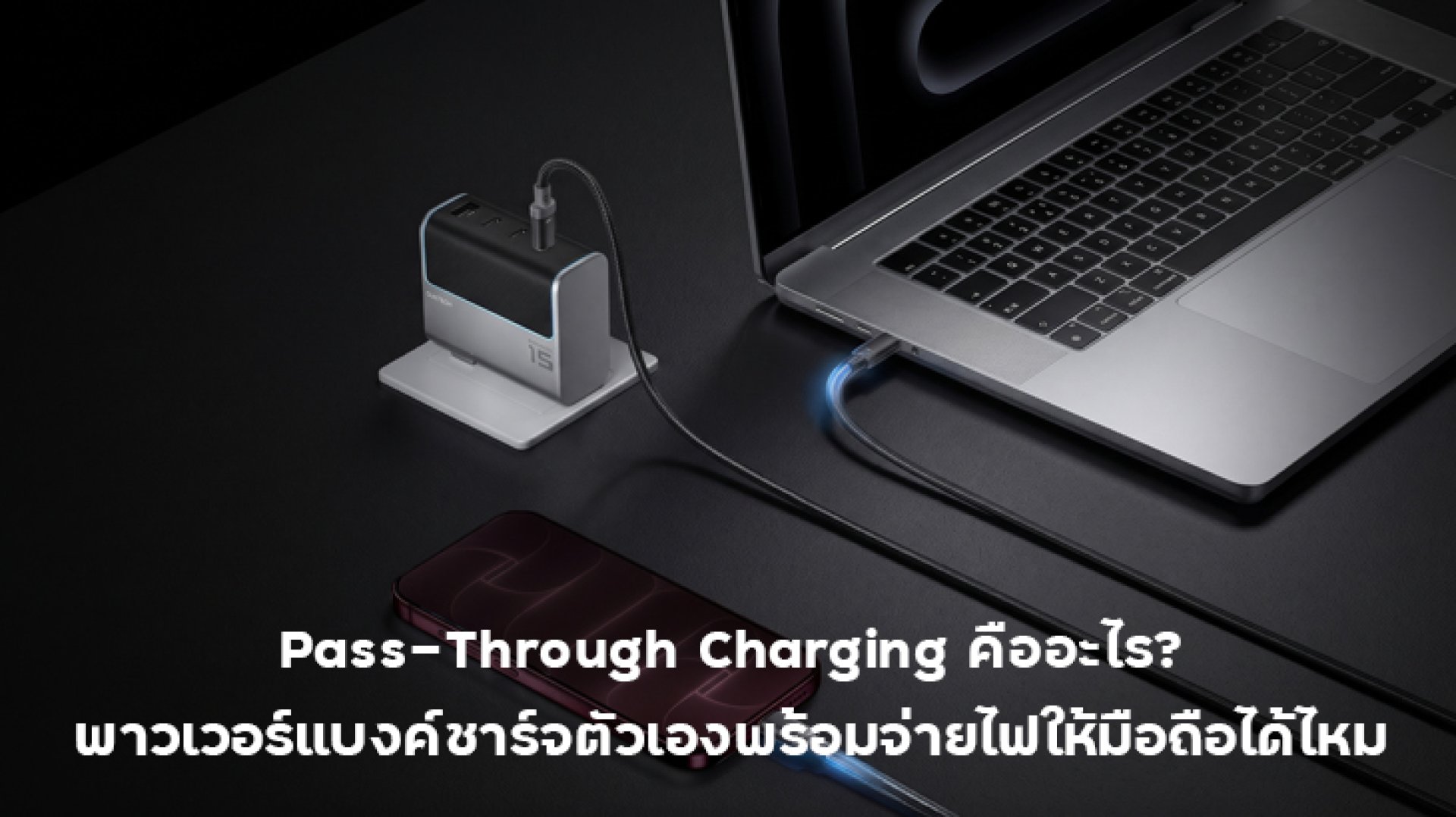
Pass-Through Charging is a feature that allows a power bank to recharge its internal battery while supplying power to a connected phone or another device at the same time. Instead of waiting for the power bank to finish charging before using it, you can potentially charge both devices through a single power source. However, not every power bank supports Pass-Through Charging, and supported models may limit charging speed or output power while the feature is active.
Imagine that you have only one available wall outlet. Your phone needs power, but your power bank is nearly empty too. With a compatible power bank, you can connect a wall charger to the power bank's input port and plug your phone into its output port. Pass-Through Charging can then supply power to both devices simultaneously. This can be convenient when traveling, working at a desk, or staying somewhere with limited outlets.
How Does Pass-Through Charging Work?
Pass-Through Charging relies on the power bank's internal power-management circuitry to control incoming and outgoing electricity. When a wall charger supplies power to the power bank, the system manages how that energy is distributed between recharging the internal battery and powering a connected device.
For example, you can connect a compatible USB-C wall charger to the power bank's input port and connect your phone to its output port. Depending on the design, the power bank may allocate part of the incoming power to your phone while directing the remaining available power toward its own battery.
The actual behavior varies by model. Some power banks prioritize device output, while others may reduce output power or stop supplying power under certain conditions. Pass-Through Charging therefore depends on the manufacturer's power-management design, not simply on the number or type of ports available.
Does Pass-Through Charging Always Deliver Fast Charging?
No. Pass-Through Charging does not automatically mean that your phone will charge at its maximum supported speed. The incoming power must be managed between the connected device and the power bank's battery, and the power bank may apply output limits while both processes are active.
For instance, a power bank advertised with a high maximum output rating may not deliver that same output while using Pass-Through Charging. If fast charging matters to you, check whether the manufacturer specifies the available output power and supported charging protocols during simultaneous charging.
Can a Power Bank Charge Itself While Charging a Phone?
Yes, a power bank can recharge itself while charging a phone if the model explicitly supports Pass-Through Charging. When supported, the feature allows incoming power from a wall charger to be managed for both battery charging and device output.
If the power bank does not support Pass-Through Charging, it may stop supplying power to the phone when its own battery begins charging. Other models may have different operating limitations. You should not assume that simultaneous charging is supported simply because the power bank has USB-C, USB-A, or fast-charging capability.
Before using Pass-Through Charging, check the product manual or official specifications. Look for terms such as Pass-Through Charging or simultaneous charging and discharging. If the documentation does not clearly confirm support, contact the manufacturer or seller before relying on this feature.
What Are the Benefits of Pass-Through Charging?
1. Charge Multiple Devices with One Wall Outlet
One of the main advantages of Pass-Through Charging is convenience. You can connect a wall charger to the power bank and charge your phone through it, reducing the need for separate wall outlets. This can be useful in hotel rooms, airports, shared workspaces, and other places where outlets are limited.
2. Reduce the Need to Switch Cables
If you regularly charge both your phone and power bank at the same desk, Pass-Through Charging may reduce the need to disconnect and reconnect cables. Instead of charging one device and then the other, you can potentially charge both in one setup, provided the power bank supports this operating mode.
3. Convenient for Everyday Charging
Pass-Through Charging can be useful when you want your phone and power bank ready before leaving home. It can simplify your charging routine, particularly if you use your power bank frequently. However, the time required to charge both devices depends on the wall charger's output, the power bank's input limit, the phone's charging requirements, and the power bank's simultaneous-charging behavior.
Important Safety Considerations for Pass-Through Charging
Although Pass-Through Charging is convenient, simultaneous power input and output can increase the demands placed on the power bank's power-management system. Follow the manufacturer's instructions and consider these limitations before using the feature regularly.
1. Charging Speed May Be Reduced
Pass-Through Charging requires the available incoming power to be managed between the power bank and the connected device. If the wall charger supplies limited power, or the power bank restricts output while recharging its battery, your phone may charge more slowly than it would when connected directly to a suitable wall charger.
For this reason, check the power bank's input rating and its specified output during Pass-Through Charging rather than relying only on its maximum advertised wattage.
2. Heat May Increase
Charging and supplying power at the same time can generate additional heat. The amount depends on the device design, power levels, ambient temperature, and charging conditions. High power demand and poor ventilation may make heat management more difficult.
Place the power bank on a stable, well-ventilated surface. Do not cover it with bedding, place it under a pillow, or leave it near a heat source while charging. If the power bank becomes unusually hot, stop using it and disconnect the charger when it is safe to do so.
3. USB-C Does Not Guarantee Pass-Through Charging
A USB-C port does not automatically mean a power bank supports Pass-Through Charging. USB-C describes a connector type, while simultaneous charging and discharging depend on the product's internal circuitry and supported operating modes.
Likewise, support for USB Power Delivery (USB PD) or fast charging does not by itself confirm Pass-Through Charging compatibility. Check the official specifications for the exact model you intend to use.
4. Stop Using the Power Bank if Something Seems Wrong
Do not continue charging if the power bank shows signs of damage, swelling, an unusual smell, repeated power interruptions, or abnormal heat. Disconnect it when safe and contact the manufacturer or an authorized service provider. Do not open the power bank or attempt to repair its internal battery yourself.
How to Use Pass-Through Charging Properly
- Confirm compatibility: Make sure the manufacturer explicitly supports Pass-Through Charging for your model.
- Use a compatible wall charger: Follow the specified input power and charging-protocol requirements.
- Choose a suitable cable: Use undamaged cables that meet the power requirements of your devices.
- Allow ventilation: Keep the power bank uncovered and away from heat sources.
- Monitor its condition: Stop charging if you notice unusual heat, damage, or unstable operation.
- Prioritize charging speed when necessary: If you need the fastest possible phone charging, connect the phone directly to a compatible wall charger when practical.
How to Choose a Power Bank with Pass-Through Charging
If you plan to use Pass-Through Charging regularly, consider more than battery capacity or maximum output wattage. A large battery or a high wattage rating does not prove that a power bank can charge its internal battery and supply another device simultaneously.
| Feature to Check | Why It Matters |
|---|---|
| Pass-Through Charging support | The manual or official product specifications should explicitly confirm the feature. |
| Input power rating | Shows how much power the power bank can accept from a wall charger. |
| Output power during simultaneous charging | Helps determine how much power is available to your phone while the power bank recharges. |
| Fast-charging compatibility | Check whether the power bank supports the charging protocols required by your phone, such as USB Power Delivery when applicable. |
| Safety protections | Review the manufacturer's stated protections against issues such as overcurrent, overvoltage, and excessive temperature. |
For example, a power bank advertised as 65W or 100W may offer that maximum output only under specific conditions. The available output during Pass-Through Charging may be lower. Always check the specifications for simultaneous operation rather than assuming that the maximum rating applies in every mode.
Frequently Asked Questions About Pass-Through Charging
Does Pass-Through Charging make a power bank battery wear out faster?
Battery aging depends on several factors, including temperature, charging behavior, battery design, and frequency of use. It is not possible to conclude that every power bank will experience the same additional wear from Pass-Through Charging. Follow the manufacturer's guidance and avoid prolonged exposure to excessive heat.
Do all power banks support Pass-Through Charging?
No. Some power banks support Pass-Through Charging, while others may stop supplying power to connected devices when their own batteries are charging. Check the official specifications for your exact model before using this feature.
Will my phone charge at the same speed with Pass-Through Charging?
Not necessarily. Charging speed depends on the wall charger's available output, the power bank's input and output limits, its power-management design, and the phone's charging requirements. Some models reduce output power during simultaneous charging.
Can I leave a power bank using Pass-Through Charging plugged in overnight?
Follow the manufacturer's instructions for the specific power bank. Place it on a stable, uncovered surface with good ventilation, and avoid charging it in locations where heat can build up. If the manufacturer does not recommend unattended charging, do not assume that overnight use is appropriate. Stop using the device if you notice unusual heat or other signs of a problem.
Conclusion: Is Pass-Through Charging Worth It?
Pass-Through Charging can be a useful feature for people who want to recharge a power bank while supplying power to a phone or another device. It can simplify charging when outlets are limited and reduce the need to switch cables. However, the feature is not available on every power bank, and simultaneous charging may affect output power, charging speed, and heat levels.
Before buying a power bank, confirm that Pass-Through Charging is explicitly supported. Check the input rating, output power during simultaneous operation, fast-charging compatibility, and the manufacturer's safety guidance. If your main priority is maximum phone charging speed, a direct connection to a compatible wall charger may be the better choice.