Is a GaN iPhone Charger Necessary? How Is It Different from a Regular Charger?
Last updated: 19 Oct 2026
25 Views
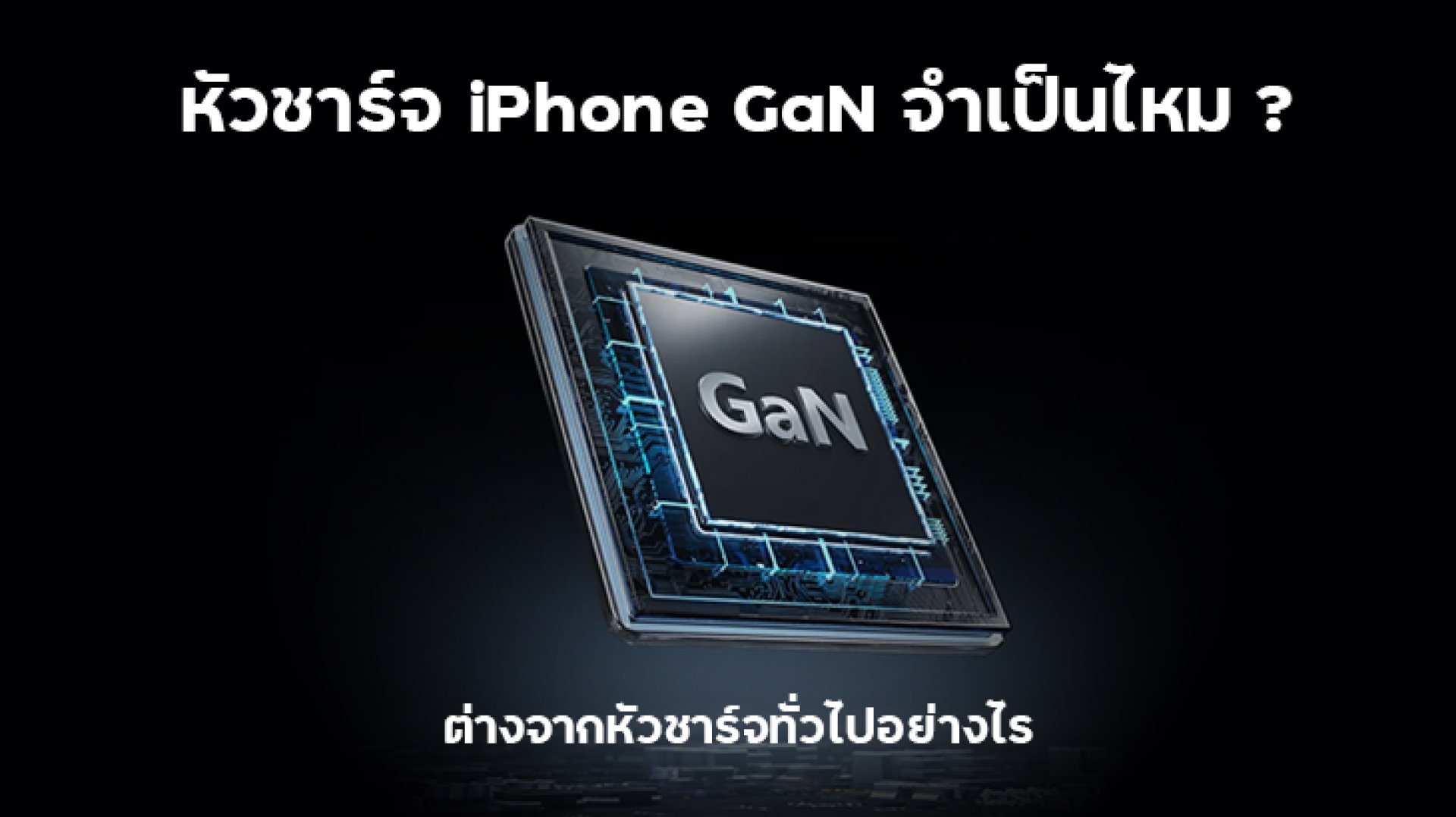
GaN iPhone chargers have become a popular option for people who want a compact, portable charger that can power multiple devices. But if you use an iPhone, do you really need a GaN charger? And does it actually charge your phone faster than a regular charger? The answer is that **a GaN charger is not necessary for everyone**. GaN technology can help make power adapters smaller and improve power-conversion efficiency, but charging speed still depends on the charger's wattage, supported charging protocol, and the capabilities of your iPhone. This guide compares GaN chargers with traditional chargers to help you decide which option offers the best value for your needs, without paying extra just because a product carries the GaN label.
If a GaN charger and a traditional charger both support USB-C Power Delivery (USB PD) and offer compatible power profiles, their charging speeds may be similar when used with the same iPhone under the same conditions.
If your current charger works well and is not too bulky, switching to GaN may not provide enough additional value to justify the expense.
1. What Is a GaN Charger?
GaN stands for Gallium Nitride, a semiconductor material used in power electronics, including modern USB-C chargers. Many traditional chargers use silicon-based semiconductor components, while GaN chargers use gallium nitride in suitable parts of their power circuits. This technology allows designers to operate switching circuits at higher frequencies and reduce certain power losses. Common advantages include:- Compact size: GaN technology can help manufacturers design smaller chargers, especially at higher power levels.
- Power-conversion efficiency: Properly designed GaN circuits can reduce certain energy losses during power conversion.
- High power density: GaN makes it possible to deliver substantial power from a relatively small adapter.
- Convenient portability: A compact charger can take up less space in a bag, especially when you carry multiple devices.
2. How Is a GaN Charger Different from a Regular Charger?
The main difference is the semiconductor technology and internal circuit design, not simply the charger's external appearance.| Feature | GaN Charger | Traditional Charger |
|---|---|---|
| Technology | Uses GaN semiconductors in relevant parts of the circuit | Many conventional designs use silicon-based semiconductors |
| Size | Can be smaller and lighter for a similar power rating | Some models are larger, particularly at higher power levels |
| Efficiency | Can reduce certain power losses when properly designed | Depends on the circuit design and component quality |
| Heat | May reduce heat generated by power losses, but still produces heat during use | Heat also depends on efficiency, workload, and thermal design |
| Charging speed | Not automatically faster simply because it uses GaN | Can deliver fast charging when it supports the appropriate power and protocol |
| Price | Varies by wattage, port count, and features | Also available at a range of price points |
3. Does a GaN Charger Charge an iPhone Faster?
Not necessarily. GaN is not a fast-charging standard. It is a semiconductor technology used inside the charger. If you want to charge your iPhone quickly, focus on three main factors.3.1 The Charger's Power Output
The charger must provide an appropriate power level for your iPhone model. A charger with a higher wattage rating does not automatically make an iPhone charge proportionally faster because the phone has its own charging limits.3.2 USB-C Power Delivery Support
For wired fast charging, check whether the adapter supports USB Power Delivery (USB PD) and is compatible with your iPhone model. For iPhones with a USB-C port, use a compatible USB-C cable. For iPhones with a Lightning port, use a USB-C to Lightning cable when charging from a USB-C PD adapter.3.3 Charging Conditions
Charging speed can also vary depending on the battery level, device temperature, and whether you are using the phone while charging. If your iPhone becomes too hot, its charging rate may be reduced to help manage temperature. The takeaway is simple: **choose the right charging standard and power output first, then consider whether GaN offers useful benefits in size and portability.**4. Do You Need a GaN Charger If You Only Use an iPhone?
If your iPhone is your primary device, choosing between GaN and a traditional charger depends more on your daily routine than on the technology itself.| Your Usage | Recommended Option |
|---|---|
| You mainly charge your iPhone at home | A charger with suitable power output and charging compatibility may be sufficient. |
| You frequently travel or commute | A GaN charger may be useful if its size and weight are more convenient. |
| You use an iPhone and an iPad | Consider a multi-port charger with enough total power for both devices. |
| You use an iPhone and a laptop | A higher-output GaN charger may let you carry fewer adapters. |
| You already own a compatible USB-C PD charger | There may be no need to upgrade if it meets your charging needs. |
5. What Wattage GaN Charger Should You Choose for an iPhone?
The appropriate wattage depends on your iPhone model and how you use your charger. Do not choose based on the GaN label or the highest wattage number alone.- 20W charger: A practical option for many iPhone models that support fast charging at this power level.
- 30W charger: Provides additional power capacity and may be useful for compatible devices beyond your iPhone.
- Higher-wattage charger: May suit people who charge several devices, such as an iPhone, iPad, and laptop, provided the charger's output specifications match their needs.
6. Is a GaN Charger Safer Than a Traditional Charger?
You should not judge a charger's safety based on GaN technology alone. Safety also depends on circuit quality, protective features, temperature management, and compliance with applicable standards. Before choosing a charger, whether GaN or traditional, check that:- The manufacturer and product specifications are clearly identified.
- The charger supports the stated voltage and power output.
- Relevant safety certifications or compliance information are available.
- The product incorporates appropriate protective features for its design.
- The seller provides verifiable product information and warranty support.
7. Checklist Before Buying a GaN Charger for Your iPhone
Use this checklist before making a purchase:- Check your iPhone model and its supported charging requirements.
- Choose a USB-C PD charger if you want wired fast charging and your iPhone supports it.
- Confirm whether you need a USB-C cable or a USB-C to Lightning cable.
- Compare the size and weight with traditional chargers offering similar power output.
- If the charger has multiple ports, check the available power when they are used simultaneously.
- Review applicable safety standards, warranty coverage, and manufacturer reliability.
- Decide whether the portability benefits justify any additional cost.
FAQ: Frequently Asked Questions About GaN iPhone Chargers
Is a GaN charger necessary for an iPhone?
No. An iPhone can use a compatible charger with the appropriate power output and charging standard, whether it uses GaN or traditional semiconductor technology. GaN's main advantages are its potential for compact designs and improved power-conversion efficiency.Does a GaN charger charge an iPhone faster than a regular charger?
Not always. Charging speed depends on the charger's wattage, supported charging protocol, compatibility with the iPhone, and charging conditionsnot GaN technology alone.Does a GaN charger run cooler than a traditional charger?
GaN can help reduce certain power losses, but actual operating temperature depends on the charger's design, power load, and thermal management. It is not accurate to assume every GaN charger runs cooler than every traditional charger.Should I replace my existing charger with a GaN charger?
If your current charger provides suitable power, charges your iPhone as expected, and is convenient to use, you may not need to replace it. However, a GaN charger may be worthwhile if you want a smaller adapter or one charger for several compatible devices.Conclusion: Is a GaN iPhone Charger Worth It?
A GaN iPhone charger is not essential for everyone, but it can be a good choice if you want a compact, portable adapter or one charger for multiple devices. If your priority is fast iPhone charging, focus first on compatible power output and USB-C PD support. GaN is an additional advantage related to the charger's internal technology, efficiency, and potential size reduction. **If your existing charger meets your needs, you do not have to replace it just because GaN is becoming popular. But if you want to carry less weight and fewer adapters, a GaN charger is worth considering.**References
- Infineon: What Is a GaN Charger and How Does It Work?
- Apple Support: Fast Charge Your iPhone
- Apple Support: About Apple USB Power Adapters