GaN Charger vs Traditional Chargers: What’s the Difference? GaN vs Silicon Explained Simply

Nowadays, many people may notice that modern chargers for smartphones, laptops, and various gadgets have become much smaller than before, while delivering significantly higher power output.
In the past, a 65W or 100W laptop charger was usually large and heavy. Today, compact chargers can deliver the same or even higher power levels thanks to new charging technologies.
The technology behind this transformation is called GaN Charger, which uses Gallium Nitride (GaN) as a semiconductor material instead of traditional Silicon.
But the question is: How is a GaN Charger different from a traditional charger? Is GaN really better than Silicon? This article will compare GaN vs Silicon in a simple way to help you choose the right charger for your smartphone, tablet, and laptop.
What Makes GaN Chargers Different from Traditional Chargers?
The main difference comes from the semiconductor material used inside the charger's power management circuit.
Traditional chargers mainly use Silicon components to control power conversion. Silicon has been widely used for decades because it is reliable, affordable, and well-established.
GaN Chargers replace some Silicon components with Gallium Nitride (GaN), a newer semiconductor material that can operate at higher switching frequencies, reduce energy loss, and allow manufacturers to create smaller chargers while maintaining high power output.
What Are GaN and Silicon?
What is Silicon?
Silicon is a semiconductor material that has been used for decades in electronic devices, including computer chips, smartphones, and power adapters.
The advantages of Silicon include mature technology, lower production costs, and excellent reliability. However, when chargers need to handle higher power levels such as 65W, 100W, or 140W, larger components are often required, resulting in bigger size and more heat generation.
What is GaN?
GaN, or Gallium Nitride, is an advanced semiconductor material that can handle higher voltage levels and operate at higher switching frequencies compared with traditional Silicon.
Because of these properties, GaN Chargers can reduce the size of internal components such as transformers and power circuits, allowing manufacturers to create smaller chargers with high power output.
GaN vs Silicon Charger Comparison
| Category | Silicon Charger | GaN Charger |
|---|---|---|
| Technology | Traditional semiconductor technology | Advanced Gallium Nitride semiconductor technology |
| Size | Larger when supporting high power output | Smaller and more compact design |
| High Power Charging | Requires larger circuits for higher wattage | Supports high wattage in a smaller form factor |
| Heat Management | More heat when operating at high loads | Lower energy loss and improved thermal efficiency |
| Efficiency | Suitable for general charging needs | Ideal for fast charging and high-power devices |
| USB-C Laptop Charging | Supported on some models | Better suited for modern USB-C laptops |
1. GaN Chargers Are Smaller Than Silicon Chargers
One of the most noticeable differences between GaN and traditional chargers is size.
A traditional Silicon charger delivering 100W power usually requires larger internal components because it needs to handle higher energy conversion levels.
GaN technology allows chargers to operate more efficiently at higher frequencies, which helps reduce the size of internal components. As a result, modern 100W or 140W GaN chargers can be significantly smaller than older high-power chargers.
2. GaN Supports Higher Power Output in a Smaller Size
GaN technology itself does not automatically make charging faster. Fast charging performance depends on other technologies working together, such as:
- USB Power Delivery (USB PD)
- PPS (Programmable Power Supply)
- PD 3.1
- The charging capability of the connected device
For example, a 100W GaN Charger can support smartphones, tablets, and USB-C laptops using a single compact adapter.
3. GaN Chargers Provide Better Heat Management
When a charger delivers high power, heat management becomes an important factor that affects both performance and product lifespan.
GaN semiconductor technology has lower energy loss during power conversion compared with traditional Silicon-based components. This helps reduce unnecessary heat generation when delivering the same level of power output.
However, it is important to understand that GaN does not mean a charger will always stay cool. The actual temperature also depends on the internal circuit design, cooling system, power efficiency, and overall manufacturing quality.
4. GaN Chargers Are Ideal for Multiple Devices
Today, many users carry more than just a smartphone. A typical digital lifestyle may include a smartphone, tablet, wireless earbuds, smartwatch, and laptop.
A multi-port GaN charger with multiple USB-C ports can combine several charging solutions into one compact device, reducing the number of adapters you need to carry.
For travelers, remote workers, and people who frequently move between locations, a GaN charger can significantly improve convenience by saving space and reducing weight.
Who Should Consider Buying a GaN Charger?
- Users who want a smaller and lighter charger for travel
- People using modern smartphones, tablets, and devices that support fast charging
- Professionals who charge USB-C laptops and want to replace bulky laptop adapters
- Users with multiple gadgets who want to charge several devices at the same time
- Anyone looking for the latest charging technology with higher efficiency
How to Choose the Right GaN Charger?
Although GaN technology provides many advantages, choosing the right charger requires considering several other specifications.
1. Check the Charging Power (Watt / W)
The charger's wattage should match your device requirements.
- 20W-30W: Suitable for smartphones and basic devices
- 45W-65W: Suitable for tablets, ultrabooks, and many USB-C laptops
- 100W: Suitable for high-performance laptops, MacBook, and multiple devices
- 140W: Suitable for demanding laptops and high-power USB-C devices
2. Check the Number and Type of Ports
Consider how many devices you need to charge at the same time.
Important points to check include:
- Number of ports (USB-C and USB-A)
- USB-C Power Delivery support
- Power distribution when multiple ports are used simultaneously
For example, a charger rated at 100W may not deliver the full 100W to one device when multiple ports are connected. The power may be divided between ports depending on the charger's power management system.
3. Check Fast Charging Standards
Besides GaN technology, the charger should support the fast charging standards required by your devices.
- USB Power Delivery (PD)
- PPS (Programmable Power Supply)
- Qualcomm Quick Charge (QC)
- PD 3.1 for higher power devices
For example, some Samsung Galaxy flagship models require PPS support to achieve maximum Super Fast Charging performance.
4. Safety Features and Certification
A high-quality GaN charger should include multiple protection systems to ensure safer charging.
- Over-temperature protection
- Short-circuit protection
- Over-current protection
- Over-voltage protection
- Surge protection
Choosing a trusted brand with proper safety certification helps ensure better reliability and long-term usage.
GaN Charger 100W vs 140W: Which One Should You Choose?
Choosing between a 100W and 140W GaN charger depends on your devices and usage requirements.
| Power Output | Recommended For |
|---|---|
| 65W | Smartphones, tablets, and lightweight laptops |
| 100W | iPhone, iPad, MacBook Air, and general USB-C laptops |
| 140W | MacBook Pro, gaming laptops, and high-performance notebooks |
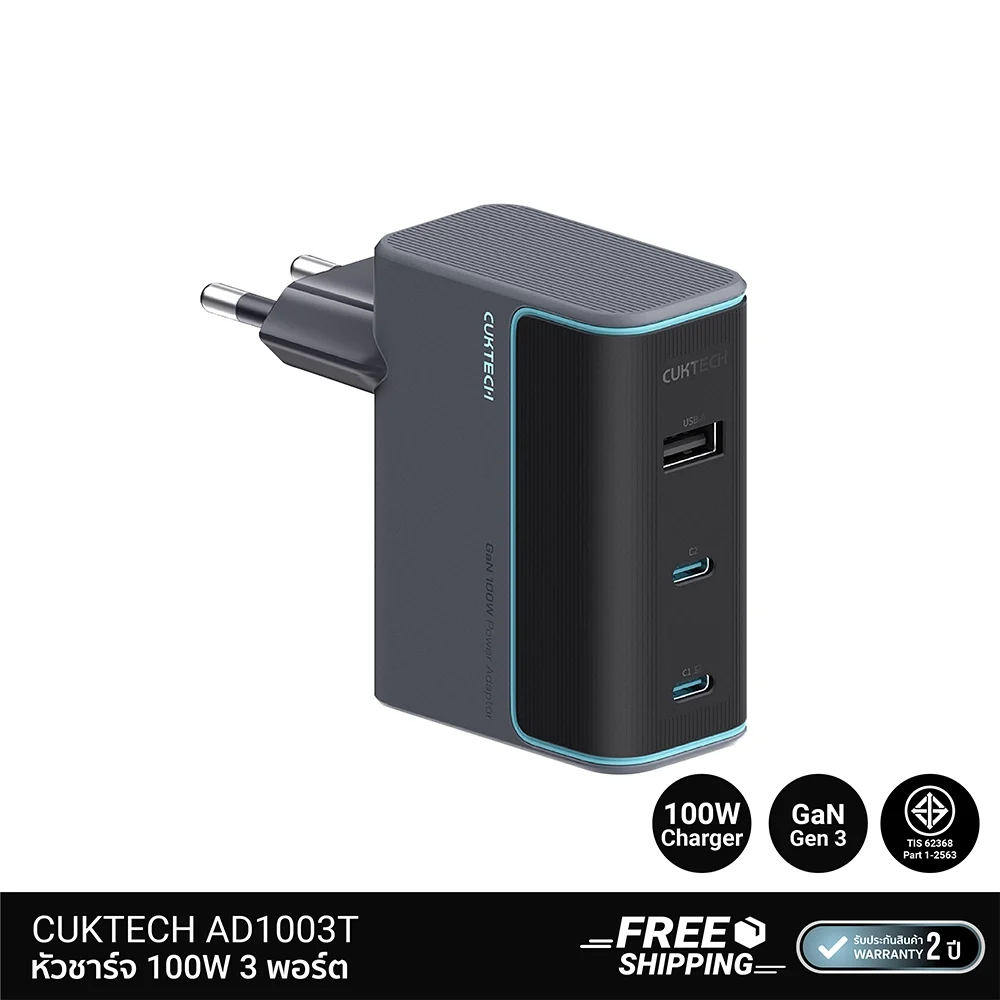
CUKTECH AD1003T GaN Charger 100W
The CUKTECH AD1003T is designed for users who need a versatile charger for smartphones, tablets, and USB-C laptops.
With up to 100W power output, it provides enough power for modern mobile devices while maintaining a compact size.
- Supports USB Power Delivery 3.0
- Supports PPS fast charging technology
- Up to 100W maximum output
- Supports USB-C laptop charging
- Three charging ports: 2x USB-C and 1x USB-A
- Supports charging up to 3 devices simultaneously
- Multiple safety protection systems
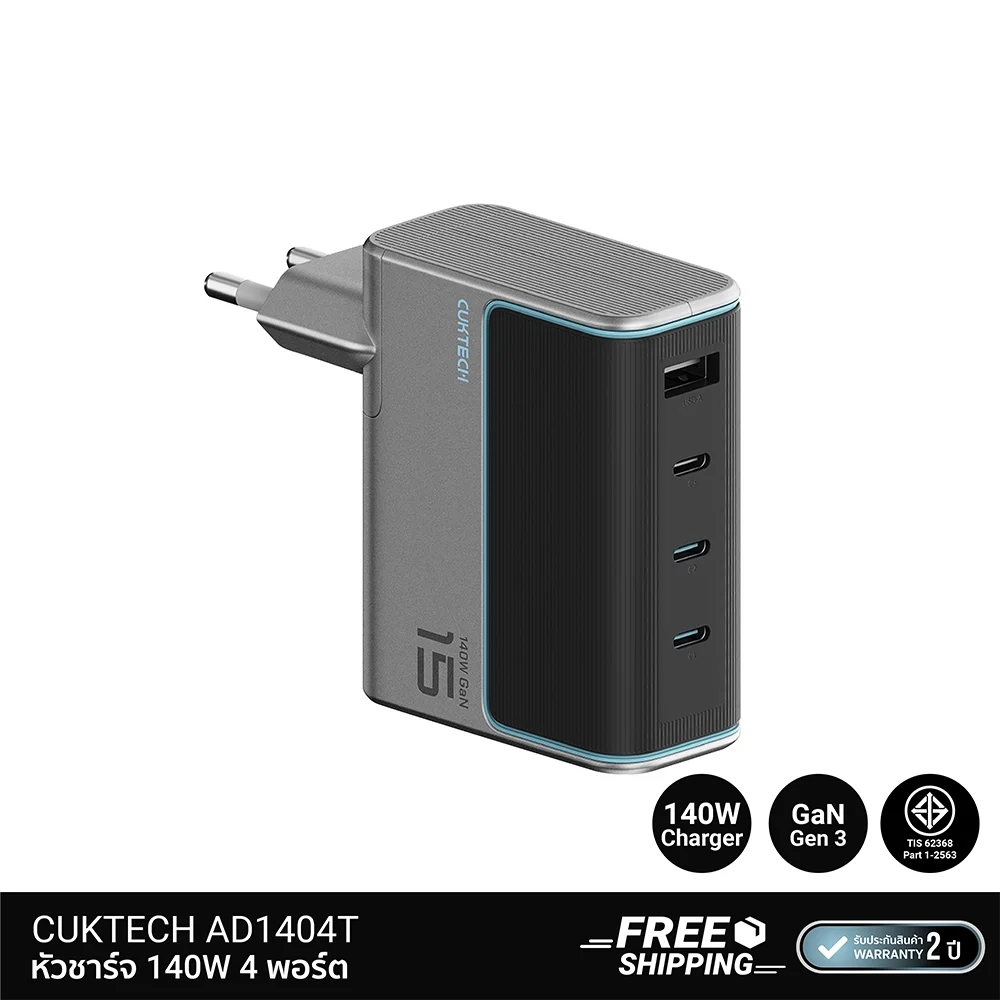
CUKTECH AD1404T GaN Charger 140W
The CUKTECH AD1404T is designed for users who need higher power output, especially professionals and power users who charge demanding USB-C laptops.
With GaN Generation 3 technology and PD 3.1 support, it delivers up to 140W power while maintaining a compact design.
- GaN Generation 3 technology
- Supports PD 3.1 fast charging
- Up to 140W maximum output
- 3 USB-C ports and 1 USB-A port
- Supports multiple device charging
- Advanced thermal management system
- 8-layer safety protection system
CUKTECH AD1003T vs CUKTECH AD1404T: Which GaN Charger Should You Choose?
Both the CUKTECH AD1003T and AD1404T use GaN technology and are designed for modern fast charging. However, they target different types of users.
The right choice depends on your devices, required charging power, number of gadgets, and whether you need to charge high-performance laptops.
| Feature | CUKTECH AD1003T 100W | CUKTECH AD1404T 140W |
|---|---|---|
| GaN Technology | GaN Charger Technology | GaN Generation 3 Technology |
| Maximum Power | 100W | 140W |
| Fast Charging Standard | USB PD 3.0 + PPS | USB PD 3.1 + PPS |
| USB-C Ports | 2 Ports | 3 Ports |
| USB-A Port | 1 Port | 1 Port |
| Total Ports | 3 Ports | 4 Ports |
| Recommended Users | Smartphone, Tablet, Ultrabook, General USB-C Laptop Users | MacBook Pro, Gaming Laptop, High-Performance Laptop Users |
| Best For | Everyday productivity and travel | Power users who need maximum charging performance |
Real-World Charging Examples
One of the biggest advantages of modern GaN chargers is their ability to replace multiple charging adapters with a single compact solution.
Charging Smartphones
Modern flagship smartphones can benefit from GaN chargers because they support advanced fast charging protocols such as USB PD and PPS.
- iPhone 17 Pro Max: Fast charging through USB-C Power Delivery
- Samsung Galaxy S26 Ultra: Requires PPS support for maximum charging performance
- Other Android flagship devices: Compatible with USB PD and supported fast charging standards
Charging Tablets and iPads
Devices such as iPad Pro, iPad Air, and Android tablets can take advantage of higher power delivery for faster charging compared with basic chargers.
Charging USB-C Laptops
For professionals who use USB-C laptops, a high-power GaN charger can replace the original large laptop adapter.
A 100W charger is suitable for many ultrabooks and productivity laptops, while a 140W charger is better suited for higher-performance laptops that require more power.
Why Choose a GaN Charger Instead of a Traditional Charger?
The main advantage of GaN technology is not simply higher wattage. It is the combination of size, efficiency, portability, and versatility.
- Smaller size: Easier to carry compared with traditional high-power chargers
- Higher power output: Supports modern devices that require more energy
- Better efficiency: Reduces energy loss during power conversion
- Multiple device support: One charger can replace several adapters
- Modern charging standards: Supports USB PD, PPS, and PD 3.1 technologies
Things to Know Before Buying a GaN Charger
Although GaN chargers offer many benefits, there are still several things you should check before purchasing.
GaN Does Not Automatically Mean Faster Charging
GaN is only the semiconductor technology inside the charger. The actual charging speed depends on:
- Supported charging protocols
- Device compatibility
- Cable quality
- Available charging power
Always Use a Suitable Charging Cable
High-power charging requires cables that support the required wattage.
For example, a 100W or 140W charger should be paired with a high-quality USB-C cable that supports the appropriate power level to achieve maximum performance.
Check Power Sharing When Using Multiple Ports
Multi-port chargers automatically distribute power between connected devices.
For example, a 140W charger may provide maximum power to one device, but when additional devices are connected, the available power will be divided according to the charger's power management system.
Is a GaN Charger Worth Buying?
For users who only charge a smartphone occasionally, a standard charger may still be enough.
However, for people who use multiple devices such as smartphones, tablets, wireless earbuds, and USB-C laptops, a GaN charger provides a much better experience.
With a smaller size, higher power output, better efficiency, and support for modern charging standards, GaN chargers have become one of the most practical upgrades for today's digital lifestyle.
Conclusion: GaN Charger Is the Future of Charging Technology
The difference between GaN and traditional Silicon chargers is more than just size. GaN technology represents a new generation of power delivery that enables smaller chargers, higher wattage output, and better efficiency.
Whether you choose a 100W GaN charger for everyday devices or a 140W GaN charger for high-performance laptops, selecting a reliable brand with proper safety features and charging standards is the key to getting the best experience.
For anyone looking to upgrade from an older bulky adapter, a GaN Charger is a smart investment that can make charging faster, easier, and more convenient.
Frequently Asked Questions (FAQ)
What is the difference between GaN Charger and a normal charger?
The main difference is the semiconductor material used inside the charger. GaN chargers use Gallium Nitride technology, which allows smaller designs, higher efficiency, and better performance at high power levels compared with traditional Silicon chargers.
Is GaN Charger safe?
Yes. A quality GaN charger from a reliable manufacturer includes protection systems such as over-temperature protection, over-current protection, short-circuit protection, and over-voltage protection.
Can a GaN Charger charge an iPhone?
Yes. GaN chargers that support USB Power Delivery (PD) can fast charge modern iPhone models when paired with a compatible USB-C cable.
Can a GaN Charger charge a laptop?
Yes. Many USB-C laptops support charging through GaN chargers. The required wattage depends on the laptop model. Some laptops may require 65W, 100W, or higher power levels.
Is a 140W GaN Charger better than a 100W GaN Charger?
Not always. A 140W charger is better for high-performance laptops and users with demanding power requirements, while a 100W charger is usually enough for smartphones, tablets, MacBook Air, and many USB-C laptops.
Does GaN Charger reduce electricity costs?
GaN chargers can improve power conversion efficiency by reducing energy loss, but the actual electricity savings depend on usage patterns and charging habits.
Do I need a special cable for a GaN Charger?
For high-power charging such as 100W or 140W, you should use a USB-C cable that supports the required wattage to achieve maximum charging performance.