How to choose a high capacity power bank
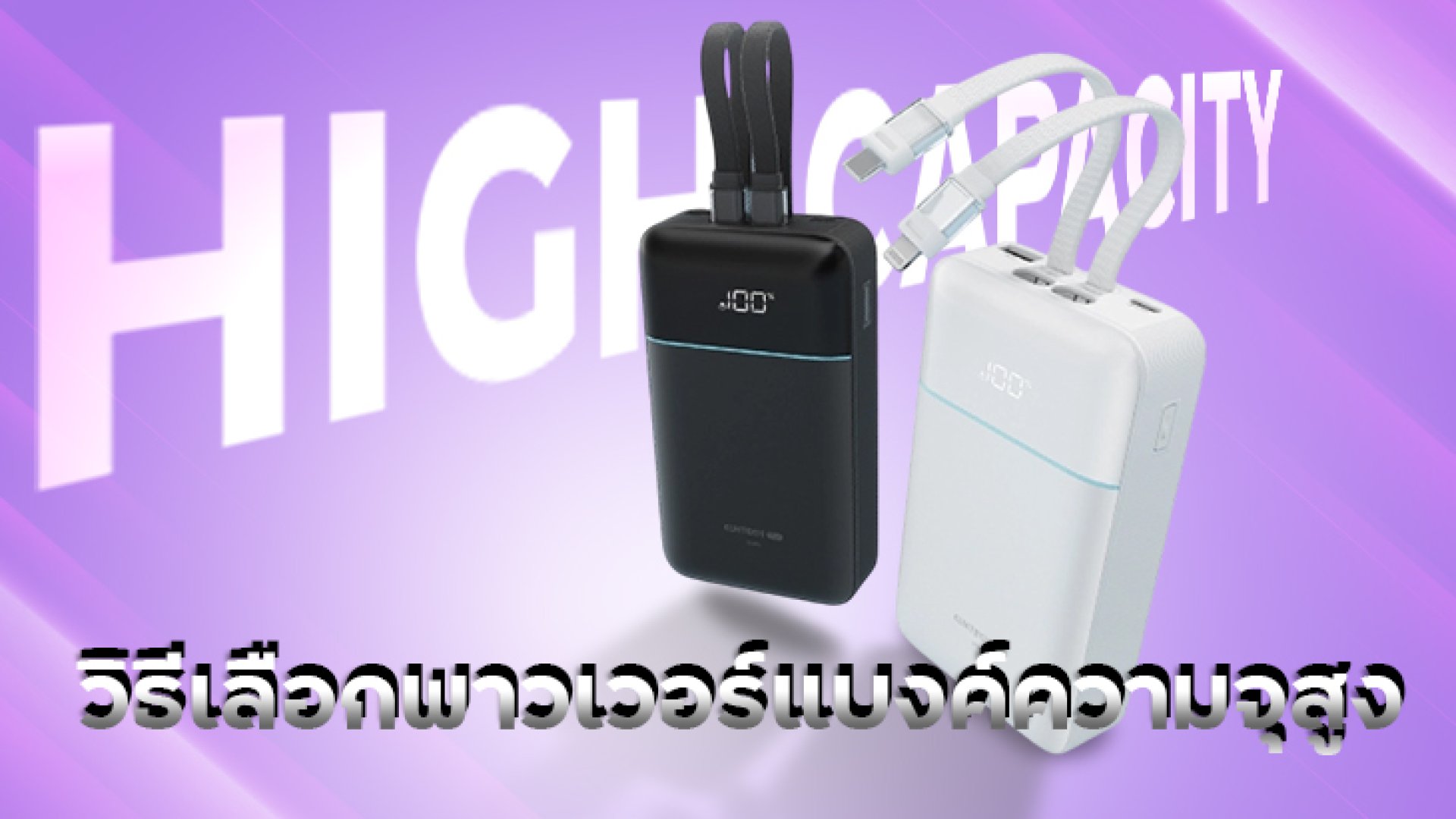
In an era where smartphones, tablets, and laptops are essential to our daily lives, a high capacity power bank has become a must-have gadget for travelers, remote workers, and gamers alike. However, choosing a power bank with a capacity of 20,000 mAh or more requires considering several factors beyond just the price tag.
1. Finding the Right Capacity for Your Needs
High capacity power banks typically start from 20,000 mAh and can go up to 50,000+ mAh. Each size serves different purposes:
- 20,000 - 26,800 mAh: Ideal for 2-3 day weekend trips. It can charge a smartphone about 4-5 times and is generally the maximum capacity allowed on commercial flights.
- 30,000 - 40,000 mAh: Perfect for camping trips or users who need to charge multiple devices simultaneously, such as phones, tablets, and cameras.
- 50,000 mAh and above: Often designed as small portable power stations, best suited for car camping or emergency backup power at home.
Note on Rated Capacity: The capacity printed on the label (e.g., 20,000 mAh) refers to the internal battery cells. Due to energy loss during voltage conversion, the actual usable energyknown as Rated Capacityis usually around 60-70% of the total capacity.
2. Fast Charging Technology
With a large capacity battery, fast charging is absolutely essential. Without it, recharging the power bank itself could take over 10 hours. Look for the following standards:
- Power Delivery (PD): A universal standard via USB-C ports, crucial for fast charging iPhones, iPads, and MacBooks.
- Quick Charge (QC): A popular fast-charging technology widely used in Android smartphones.
3. Ports and Output Wattage
Always check the number of ports available and ensure the Output Wattage matches your devices' requirements:
| Device Type | Recommended Wattage (Minimum) |
|---|---|
| Smartphones | 15W - 25W |
| Tablets / iPads | 30W |
| Laptops / MacBooks | 45W - 65W+ (Must support PD) |
4. Safety Standards and Certifications
High-capacity batteries can pose serious risks if poorly manufactured. Always choose reputable brands that have passed international safety certifications such as CE, FCC, RoHS, or local standards like TISI (for Thailand). Reliable models should also feature overcharge, short-circuit, and temperature protection.
Frequently Asked Questions (FAQ)
Q: What power bank capacity is allowed on airplanes?
A: According to the International Air Transport Association (IATA) guidelines, power banks under 20,000 mAh (100 Wh) can be brought in carry-on baggage without restriction. Capacities between 20,000 and 32,000 mAh (100 - 160 Wh) are limited to 2 units per person. Power banks exceeding 32,000 mAh (160 Wh) are strictly prohibited on commercial aircraft and must never be placed in checked luggage.
Q: Why does my high capacity power bank take so long to recharge?
A: This usually depends on your wall charger and cable. To speed up the process, use a high-wattage wall adapter (e.g., 30W-65W) paired with a compatible fast-charging cable to drastically cut down the recharging time.
References
- Guidelines for Lithium Batteries in Passenger Luggage: International Air Transport Association (IATA)
- Industrial Product Standards: Thai Industrial Standards Institute (TISI)